Proper water supply, sewer systems, and storm-drainage networks are essential for any home, business, or community to function. That’s where wet utility construction comes in. If you’re searching for “wet utility contractors” in Utah — especially in places like Salt Lake City, Spanish Fork, Layton, Ogden or Park City — here’s a clear guide to what wet utility construction involves, why you need professionals, and why choosing a full-service contractor like Jollie Construction is often the smartest move.
In this post you’ll learn how wet utilities work, what a complete installation or upgrade entails, common challenges, and what to expect when working with experienced wet utility contractors.
What Are Wet Utilities — And Why They Matter
“Wet utilities” refer to the underground infrastructure that handles water supply, sewer (wastewater), and stormwater drainage. These systems ensure safe delivery of clean water, and responsible removal of wastewater and runoff.
Core components include:
- Water mains and service lines supplying potable water
- Sewer mains, laterals, sewer laterals and sanitary sewer systems to carry wastewater away from properties
- Storm drains, drainage piping, retention basins or stormwater systems to handle rainwater and runoff, protecting properties from flooding and erosion
- Manholes, access chambers, valves, fittings, and other infrastructure elements required for maintenance, inspection, and connectivity
Without properly installed wet utilities, a building or community may face serious issues: contaminated water supply, sewage backups, flooding, drainage problems, and regulatory non-compliance. A professionally installed system is the backbone of safe, functional, long-lasting infrastructure.
What Does Wet Utility Construction Involve?
Building or upgrading wet utilities is not as simple as digging a trench and laying pipes. Reliable wet utility construction — like the services offered by Jollie Construction — involves a multi-step, detail-oriented process:
- Planning and design — Assessing site conditions, mapping out water, sewer, and storm drain layouts, specifying pipe sizes/materials, valves, manholes, and ensuring compliance with local codes and regulations.
- Permitting and approvals — Obtaining required local or municipal permits for water supply, sewer, storm drainage, and infrastructure work (especially for public or commercial projects). Regulatory compliance is essential.
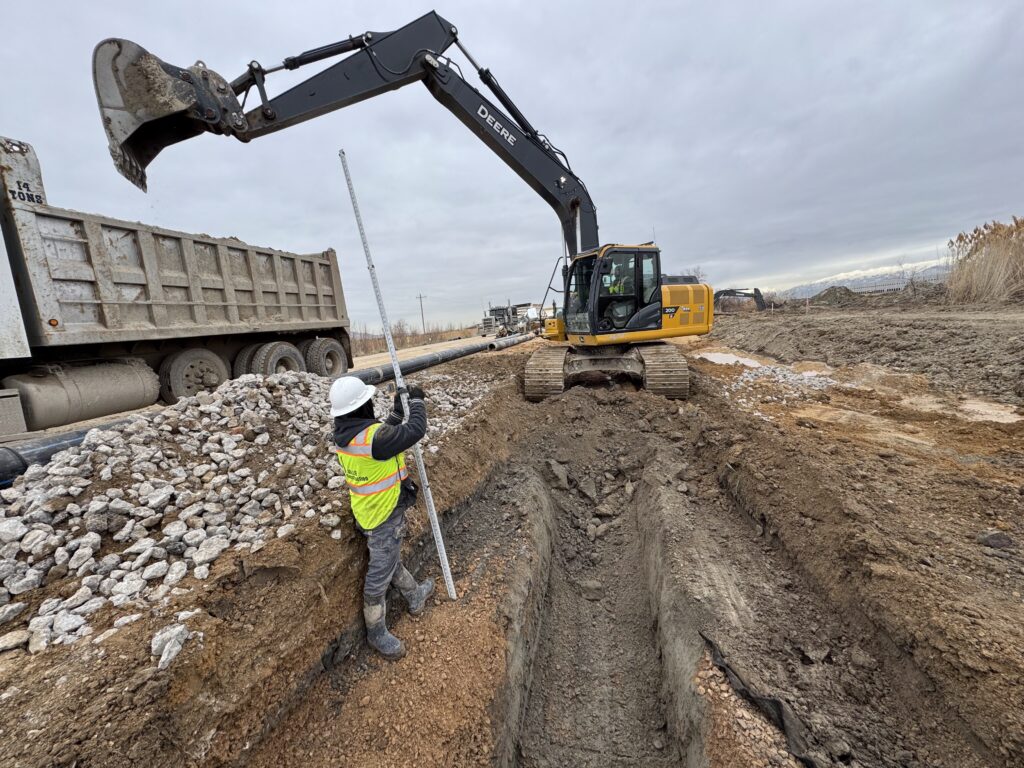
- Excavation or trenching / site preparation — Digging trenches or excavations to install water mains, sewer lines, storm drains. This also includes backfilling and restoring the surface after installation.
- Pipe installation & system assembly — Laying water lines, sewer mains, installing manholes, valves, connections, storm drain systems, branch lines, and linking into existing networks or building supply.
- Inspection and testing — Verifying alignment, grade (especially important for gravity-based sewer and storm lines), leak tests, pressure tests for water lines, and making sure everything meets standards.
- Backfilling & restoration — After installation, filling trenches, compacting soil, and restoring landscaping, driveways, or road surfaces to original or improved condition.
- Ongoing maintenance & possible future upgrades — Over time utilities may require maintenance, repairs, or upgrades to accommodate growth. A good contractor supports that.
Because wet utilities run underground, they are mostly hidden from daily view. But their importance can’t be overstated. They support every faucet, toilet, storm drain, and water outlet in a home or development.
What Makes a Good Wet Utility Contractor
Not all contractors are equal when it comes to wet utility construction. The difference between a job that lasts decades and one that constantly needs patching lies in experience, precision, and attention to detail. Here are what to look for:
- Experience across water, sewer, and storm systems — A contractor should understand all three aspects. Jollie Construction, for instance, handles water supply lines, sewer mains/laterals, and storm drainage systems.
- Full-service capacity — From excavation to pipe laying, manholes, valves, backfilling and site restoration. That reduces the risk of miscommunication when multiple subcontractors are involved.
- Regulatory compliance and safety standards — Wet utility work must meet local building, health and environmental codes. A reputable contractor ensures compliance at every stage.
- Quality materials and precision in installation — Pipes, fittings, valves, manholes, and storm components must be correctly specified and installed to ensure long-term reliability.
- Ability to handle challenges — Soil conditions, groundwater, existing infrastructure, and terrain can complicate installations. Skilled contractors anticipate and manage these.
- Clear communication and full transparency — From project scope to schedule, materials, and restoration after work — transparency is key for trust and satisfaction.
Choosing the right wet utility contractors saves time, avoids unnecessary repairs or failures, and ensures a system that works reliably for years.
Why Wet Utility Construction Matters in Utah — Local Context
If you live in Utah — whether in Salt Lake City, Spanish Fork, Layton, Ogden, Park City or surrounding areas — proper wet utilities are especially important. Growing populations, shifting development, seasonal weather and turning terrains mean water supply, sewage, and stormwater systems must be carefully planned and robust enough to handle demand.
As Utah communities expand, whether residential subdivisions, commercial sites or mixed-use developments, demand for reliable underground systems grows. Hiring a seasoned contractor ensures infrastructure is built to handle growth, environmental stresses, and long-term use — avoiding costly repairs or failures down the road.
What Jollie Construction Offers — A Full Suite of Wet Utility Solutions
Here’s how Jollie Construction serves clients across Utah with top-tier wet utility construction:
- Water supply line installation — From main water mains to service connections, valves, fittings and full water distribution systems.
- Sewer system installation — Including sewer mains, laterals, manholes, sewer connections — ensuring safe, reliable wastewater removal.
- Stormwater drainage systems — Storm drains, retention basins, drainage piping to properly manage runoff and prevent flooding or erosion.
- Full excavation, trenching and site preparation — Handling all groundwork required for underground installation, ensuring alignment, grade, and compliance.
- Backfilling and site restoration — Once systems are in place, they restore the surface: roads, landscaping or development areas.
- Service for residential, commercial, and municipal clients — Whether a new home subdivision, a commercial development or municipal infrastructure, they are equipped for projects of varying scale.
- Service area across major Utah regions — Salt Lake City, Spanish Fork, Layton, Ogden, Park City, and surrounding areas.
Common Challenges in Wet Utility Construction & How Professionals Handle Them
Building underground utilities is complex work. Challenges include:
- Unstable or difficult soil conditions — Clay, rock, high water table, or shifting soils can complicate excavation or pipe laying. Professionals assess soil and adapt trenching, bedding, and pipe installation accordingly.
- Existing infrastructure or congested utilities — Especially in developed areas, electrical, telecom, and old utility lines might already exist. Skilled contractors coordinate to avoid conflicts and ensure safety.
- Regulatory compliance and permitting — Water and sewer systems involve health, safety, and environmental codes. Professionals handle permit applications, inspections and code compliance so there are no legal headaches.
- Ensuring proper grade and flow — especially for sewer and storm systems — Gravity-based systems must follow very precise slope requirements. Incorrect grade can lead to slow flow, backups, or flooding. This requires technical expertise and precise execution.
- Restoration and site management after excavation — Once pipes are in, the disturbed surface (yard, roads, landscape) must be restored. A thorough contractor handles backfill, compaction, and surface finish.
When you trust a qualified contractor, these potential pitfalls are managed and mitigated — saving you time, money, and stress.
How to Choose the Right Wet Utility Contractor in Utah
If you are looking for a wet utility contractor in Utah, keep these criteria in mind:
- Experience with water, sewer, and storm systems — not just one utility type.
- Full-service capability (excavation, pipe installation, manholes, drains, backfill, site restoration).
- Familiarity with local regulations and permitting requirements in Utah municipalities.
- Solid track record and references — ideally including residential and municipal projects.
- Transparent project planning, clear communication, and commitment to quality materials and installation.
Jollie Construction meets all these standards — a reason many clients across Salt Lake City, Spanish Fork, Layton, Ogden, Park City and surrounding areas rely on them.
Conclusion
Wet utility construction is a critical foundation for safe, functional, and long-lasting water, sewer, and stormwater infrastructure. For homeowners, developers, or municipalities in Utah, investing in professionally installed wet utilities ensures reliable water supply, proper wastewater removal, effective stormwater management, and peace of mind.
Choosing experienced wet utility contractors like Jollie Construction means you get full-service solutions — from excavation to installation to restoration — and a team capable of handling the complexities underground utilities present.
If you are starting a new project or need to upgrade or repair your utilities, contact Jollie Construction. Their comprehensive wet utilities services, wide coverage across Utah, and commitment to quality make them a top choice for underground utility construction.